


Over the last few weeks I’ve been to five galleries.
Over summer, it’s generally group shows that bring in a low attendance.
In three of the shows, I knew an artist involved. But in each case I left without any real connection to the gallery, the other artists, or the industry. At no point did I feel like I was brought in.
Now, some might say: “Russ, you’re an artist. You’re meant to go and talk to them.” But I know what I look like. And unless you know who I am, you’re not going to stare at me and say, “Hey, this guy is an artist. We should probably go talk to him.”
When I engage in the art world in a conventional way, I don’t like the experience. I don’t feel well looked after. And I’ve been doing this for a while now. But when I engage in other industries, fashion, luxury shopping, nightclubs, private members’ clubs, all industries where I’m not from them and generally not the perfect client, I still feel looked after. Or at the very least, I understand the game required to be looked after.
My understanding of the world is that art is a service. Any activity that it’s a privilege to undertake, in a commercial manner, is a service. If you have the good fortune to be able to do something that some people work hard to be able to do in their spare time, and it makes money, it is a service. Because the days of you doing that may be numbered if you think otherwise.
And when I speak to artists, I get that feeling. I know that we all care. We all care because we know that we get the chance to do something that little us prayed that they could do. But when I speak to gallerists, I don’t feel the same way.
And that’s because money is a gatekeeper.
Which is fine.
Unless it’s broke.

Money people
I have a small group of associates. I would love to say they’re friends, but they’re a little bit further away than that. I speak to them once every three to four months. A couple of them read this newsletter. I guarantee if I ask four of those people what their favourite gallery is, they would say the Tate.
If I go to the group of people financially below that, the ones happily spending £15 to 20k on trips abroad for friends and family, the ones that have just bought new APs, the ones that are pretty close to getting through their next round of funding, and ask them who their favourite artists are?
Apart from me, they don’t know any.
But they can tell you where the newest openings of restaurants are, globally.
They can tell you which are the best boats to go on. And they’ll even tell you the best places to go skiing, or, if you want something a bit more dangerous, an off-piste adventure in the desert.
They know what’s going on, because they know when something has swag.
Because that is where they spend.
They know who the cool musicians are. Some of them even know the niche things, like up-and-coming chefs, or hotels in obscure locations that are hard to get to.
One of my favourite collectors always knows the best dance shows and theatre productions in London.
She rents out superyachts and shares this list with her clients. Not long ago, I asked her what her favourite galleries in London are.
She didn’t know.
She’s one of very few people I know with a client base wealthy enough to change the London art world and loves art herself.
And she hasn’t found enough pull within our world to be interested.
The galleries?
The art world?
Not everybody cares enough to check them out to see what they have on offer.
One friend just started paying £2k a month to be part of a mastermind group to help him improve his business performance.
Some of them have multiple club memberhsips, where they pay between £3,000 and £8,000 a year to go to events and meet other people.
They’re part of communities and they’re willing to spend to enable them.
They’re just not choosing to be part of this one.
Because they don’t think it’s fun.
And they don’t see it as a part of culture, because they get that elsewhere.
Different game at the top
If you’re a top-tier gallery, you have the privilege of overwhelming amounts of demand for your limited supply of work and great artists. It is in your best interest to play the game of making sure everyone feels like they have to work hard to get a piece. It helps you increase the price of the work.
But I don’t think the rest of the art market should be replicating this model. I believe most people within the art market are trying to do so just to serve their egos. And I believe that’s resulting in a weaker market overall. It’s also resulting in less money on the table, because people don’t like it.
People are willing to undergo the pain of poor service at a top-tier gallery, or at Hermès or Chanel, because it is established as a brand, other people want it, and you understand the game going in. Art may, at that tier, be able to take that status. But right now it doesn’t have it, because it is culturally irrelevant to those outside of it.
Scarcity only works when demand exceeds supply. That is not something we are experiencing in the vast bulk of the industry.
More importantly, we are still providing a luxury good. And the only insight into luxury goods that I see within the art world is the balance of supply and demand. But the most important fact to understand about luxury goods is that the volume of sale increases the more experience a consumer has with the product. I am highly unlikely to buy a Ferrari before I sit in it. But once I sit in it and take it for a spin, believe me, I am far closer to making a purchase of that vehicle, whether it’s a good financial decision or not.
Fashion already understands this. It produces perfumes, T-shirts, anything it can do to enable people in the spectator position to become a customer in fifteen years.
Art need not try and do this through prints or commercialisation. But what it can do this with is community and education. Because the most important thing that we have isn’t someone that buys an expensive work. It’s someone that understands what an artist is trying to say over a fifteen-year period, and is willing to tell the world about it in a way that they can understand, and help that artist gain a stronger foothold culturally.
Warum
Why do I think this happened?
Galleries took over the sales function.
Which means they have to own the marketing funnel. They have to. However, the media environment galleries are in has changed significantly since they took the lead. As such, what you’re seeing is a large number of artists circumvent the gallery system by approaching the media environment directly. Alec Monopoly and the Instagram artists are great examples of this.
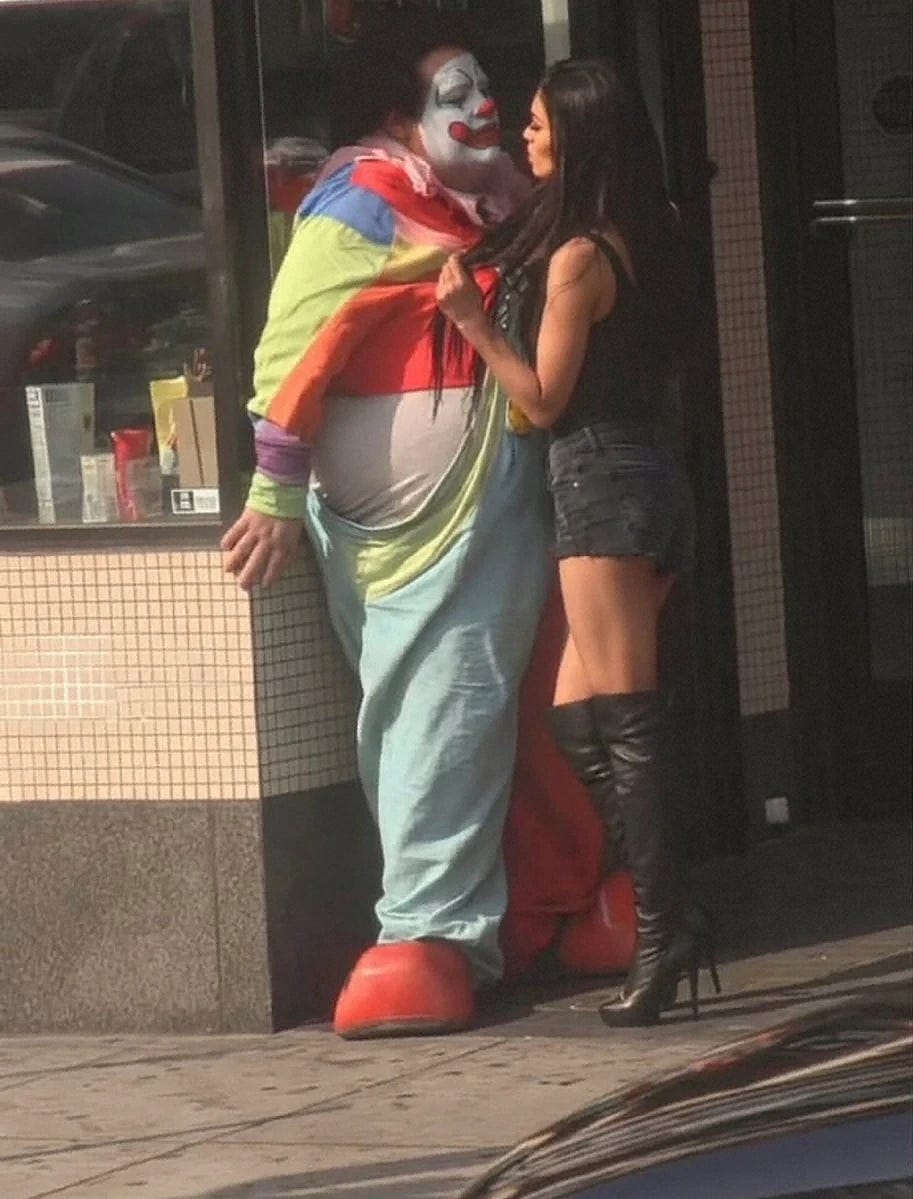
In the first few years of an artist’s career, the artist and the sales function are within the same world. And if you’re independent, like myself, that’s the way it stays. And you can choose whichever media environment you want.
For most galleries, a lot of that is going to be done through email and in person. And they’re going to have a very small footprint online. Because they assume the people they know, the ones that come through their doors, are sufficient. Clearly, for many galleries, that isn’t true.

But it’s clear to me that if artists the art world would consider unsuitable can build out fully fledged practices, ones that also support other artists, there is cash being left on the table.
None of this is revolutionary. It’s just stuff that artists are already doing. But artists are doing it. Not galleries. And if you look around on Substack, you will find artists talking. You will find critics talking. You’ll find curators talking. But where are the galleries?
Δ
The art world is going through a change of guard.
The institutions that will survive the next three years will have the following characteristics:
A growing customer base
Growing revenue
Growing cultural relevance.
Some of them will take the following approach.
Find customers from adjacent industries or worlds, through content and non-competitive collaborations.
Educate them on Art, and develop their taste.
Provide them high-quality service, so that they feel part of a community, and become customers.
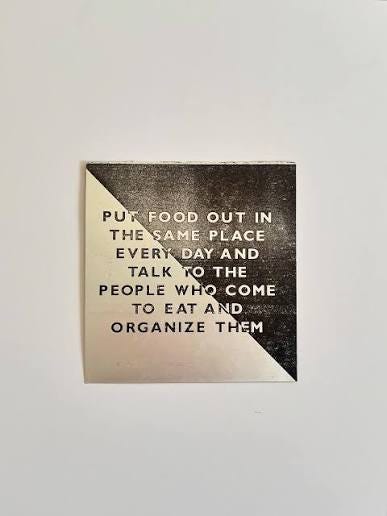
Those institutions will be here in five years’ time.
The clearest path I can see, whether that’s for an independent artist or a museum, is aligned with both the incumbent egos and the new media environment is as follows:
Institutions will rely on three communication methods.
Social media,
Email,
In-person events.
There will be nothing crazy or new…
On socials
They’ll create long and short-form educational content that helps people understand how to engage in art.
They will document shows before and after, so people can decide whether to attend.
And they will provide something interesting, whether it be satire, their own TV show, or podcasts along the side.
I think, realistically, you’re probably going to see something like Barstool Sports for Art appear in the next year or two.
It’s probably going to be based in New York.
Someone is going to take that, probably somebody who’s already doing something like this as a podcast.
Whoever establishes it, and creates a coherent communication system around global art involving The US (both coasts), Europe and Asia, is going to sweep up here.
It’s probably going to be a media organisation that’s the next big name within the arts, rather than a gallery.
It’s likely the biggest piece of the pie left in the change of guard.

On email.
They will write more and collaborate with writers more often.
The art world and the writing world sit next to each other.
Writers already write for shows.
Critics are writers.
They are already part of the media environment, but their reach is not being pushed.
I imagine it’s not hard to build a small email flow around the artists coming in and out of the programme.
It still surprises me that, with all of the shows I’ve been to and all of those guest books I’ve written in, my inbox isn’t full of emails and interesting insights into the artists in these galleries.
Maybe my handwriting’s poor and I’m not getting all those emails.
More likely, it’s just not part of the way they’re doing business.
I expect they’re going to be sending show updates, doing Q&As, introducing the artist and the ideas, before and afterwards.
They’re going to write frequently, because there is a significant amount of noise out there. And the reality is, if you’re not commercially competitive, you’re also not culturally competitive.
People vote with their dollars.
In person
We’re going to see more community events,
More talks.
More “activations” of existing shows
Brands have realised this works, they even call up people like me to do it for them.
What’s crazy to me is that the highest cost for most galleries is their real estate spend, and then they spend very little trying to get people into it.
If you look through what I’ve listed here, none of these are expensive things to do. They cost time, yes.
But I’m sat here in a studio by myself, and I imagine most galleries have a bigger staff count than one. And I have to make things as well.
So if I’m able to do it here, there are definitely going to be galleries out there that can double down on this.
If there is any value in what I’m saying about bringing in other people, I think this is the easiest way to get it.
I’m not saying everyone has to do it. But someone reading this is going to know someone that’s going to take this strategy.
And I tell you: in five years’ time, they’re going to be happy.
Scale
Realistically, if you’re an institution of any scale, within two to three years you’re going to start making video content.
Better sooner rather than later.
And when the whole of the art world is doing this, we’re going to see consensus over how our video formats look.
There’s already some.
The level of abstraction that’s acceptable.
The slow frames of how we present art.
The use of foreground and background.
The absolute love of the horizontal format.
And I think that language is going to be interesting.
But why am I even talking about this?
Maybe it’s crazy that I’m saying this stuff, and it comes off as conceited.
“Hey Russ, you’re an artist. Make some art. Put it out.”
Is this even your responsibility? Does this even affect you?
But what I do believe is that everyone on this newsletter cares about art in some way. And my way of bringing people into art is through this communication. I came to art through a weird route.
I grew up in a rural town, with not a lot of money, and a narrow focus on what existed as art. It took me a long time to realise that this was a world that could support how I live.
And as such, I understand how easy it is for people to not know this exists. I imagine, for a lot of people on this newsletter, I might be the first artist you’ve ever heard speak.
I’m very grateful for that. It’s an honour.
There are other great artists. Artists significantly better than me, that I will spend the rest of my lifetime trying to get as good as.
But I do believe I’m solving something. Which is the fact that I communicate with you.
And that fills me with so much joy.
I think galleries will do the same.
And this is my way of saying I’m going on this route. And I believe it is a path that is big enough for more of us.
You may not agree with my strategy or my ideas.
If you work in art, you may think it’s not going to work.
That’s fine. Watch this space.
But if you’re in art, and you know someone who’s trying to do something interesting to get more people into it, then please send this to them. I would love to talk to them and understand what they think.
The art world and the art market have value.
If that value isn’t known to the right people, and we do not yet know who they are, it will shrink.
If you love art, and you believe the world is better when we’re able to see one another’s perspective, then please share this with someone relevant.
Final Words
Next week, I’m going to be talking about abstraction.
Over the last few weeks I’ve really tried to redefine how I’m approaching my practice, beyond the work that I’m creating, and I’ve had to make a number of sacrifices that have hurt a lot.
I really hope that what comes from those is of benefit to you and your world.
As always,
it’s an honour to be able to create for you.
I love you loads.
Your obedient servant,
Russ x