


I don’t know where to look.
Temptation.
My eyes are fixed in place
just so they don’t wander.
But I’m blinded.
Blinded by my inability
to give them what they want.
I step inside
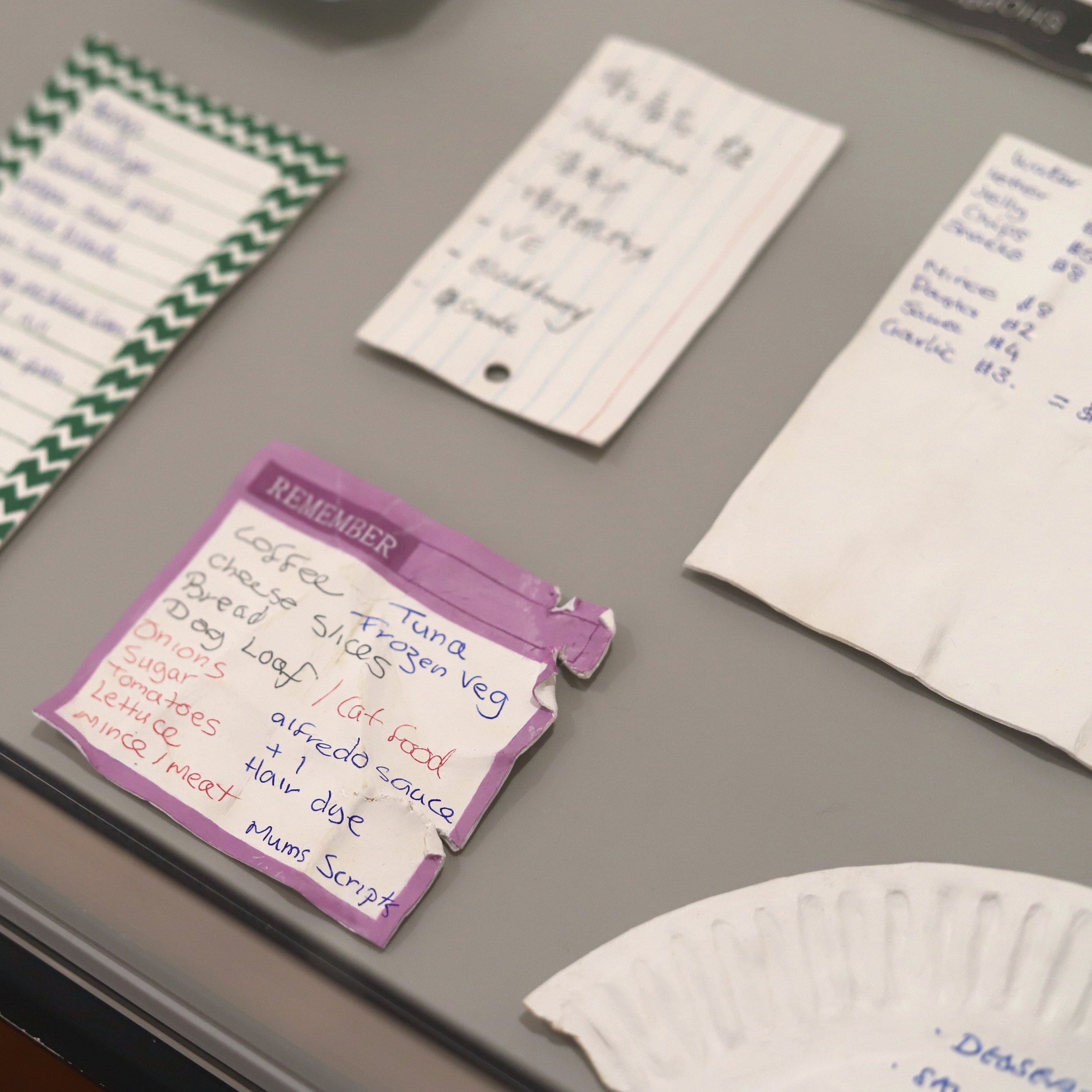
and look at the list.
I’ve thought about it all day.
Just follow it.
But as I wander,
as I explore,
I start to realise
maybe the list isn’t correct.
I didn’t expect to see
what I can see now.
But I can see it.
And maybe this is what I want
instead.
I look down at the basket.
Empty.
Light.
The only thing it’s carrying
is the weight of opportunity.
Of what it could become,
of where this adventure could go.

This is meant to be easy.
People do it every day.
But I want something special,
and I thought I knew how to make it.
I did.
I wrote it all down.
But now I’m here,
the options have changed.
I hold off from the complexity.
Keep it simple.
Eggs.
Flour.
Chocolate.
Sugar.
Sugar.
Why are there so many options for sugar?
Is that all a brownie is?
Sugar.
Maybe that’s what I need to change
The unknown
Granulated, caster, Demerara, Muscovado, light brown, dark brown, coconut, turbinado, icing, golden, molasses.
The same ingredient in different forms.
The same process with different outcomes.
Muscovado is unrefined cane sugar. The molasses is never removed from it. It’s dark, wet, and sticky. Put it in brownies, and you get something dense and treacly that will hold moisture and chew back when you bite into it.
Swap it for caster and everything begins to lift. A lighter crumb, a finer texture. The kind of brownie that dissolves the moment it hits your tongue.

Use Demerara on top, and you create a surface that shatters against your teeth. And the basic granulated sugar that we all know and love? It keeps the centre gooey, simply because it’s too coarse to dissolve quickly enough.
Sugar, as a single idea for a single ingredient, completely undermines how varied that ingredient actually is.
Steel
The world produces around 188 million metric tonnes of sugar every year. It’s one of the most abundant processed materials on earth. Ubiquitous. Ordinary. Varied…

The world produces about 1.9 billion tonnes of crude steel annually, roughly ten times the amount. But stainless steel, the refined version, the one that resists corrosion, accounts for only 64 million tonnes. About 3% of all steel production. Stainless steel is rare within its own category.
And the thing that separates one type of steel from another is the carbon within it.
Low-carbon steel, which we normally encounter in car panels and park benches, has between 0.05% and 0.25% carbon.
High-carbon steel, the kind that you find in a sharp knife, sits at 0.6% to 1%.
Less than a 1% variation, delivered through a highly complex process, is the difference between something ubiquitous and something that can change the world.
You’re probably wondering why I’m comparing steel and sugar.
How much we control that small, fickle variable completely defines the outcome.

The difference between sugars, like the difference between steels, comes down to that fraction of a percent: the molasses left in, the carbon added.
And the reality between a good brownie and an average one is the sugar.
It was always the sugar.
Mastery
Mastery of a known form requires fluency in the material beneath it, and that fluency only comes from making things that don’t look like the form at all.
When you start doing something seriously, you start to realise what the most important lever is within it.
What I've realised is that the most important variable for me sits somewhere between perception and interaction. It’s in that short moment when someone's understanding of something shifts because they're inside it, not outside looking in. I can't name it precisely yet.
But just as the early blacksmiths didn’t really understand that carbon was the variable in their steel, I too, don’t fully understand what it is within my work that makes certain people spend 30 minutes with a painting or what makes them go a little bit wild when they encounter my interactive work on the street.
But I think the best way to understand it is by making lots of different things that are somehow adjacent.

For those early makers working with metal, everything they made involved carbon of some type; that’s how steel evolved through the blacksmiths, through centuries of experimentation with a variable they couldn’t identify.
Just as the best pastry chefs can produce wildly different desserts from the same core ingredients, what I’m trying to understand is how to make art that has a measurable effect on the viewer. Where you can actually see them change. Where the viewer’s decisions, how they shift while interacting with the work, become the thing that people get to watch.

That’s what’s really interesting for me.
Seeing how much art can move you.
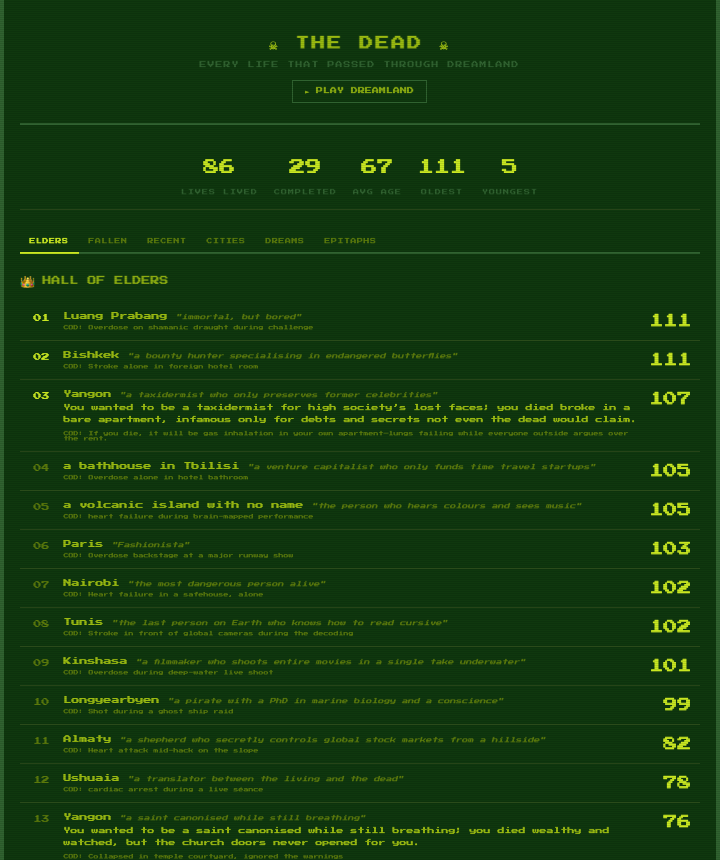
Here’s some stuff I’ve made that helps me understand my molasses and carbon. You can click the images to learn more. Also, Dreamland has had another update with a leaderboard to perv out on look at everyone else’s games. It’s still anonymous, so your crazy dreams aren’t attributable to you.
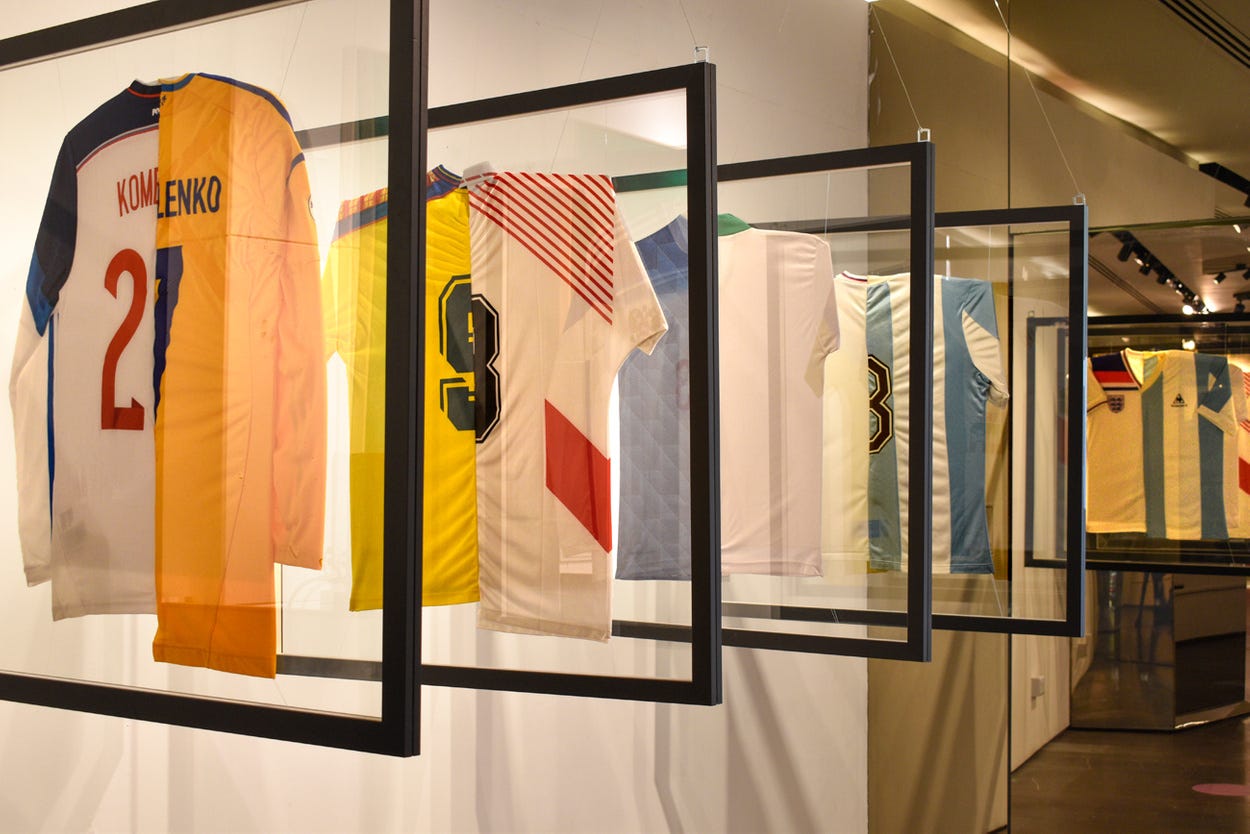
Conflict Utd. Football shirts from World Cup and Euro Cup official matches, collected from the same years that those countries were at war with one another. The shirts are cut in half and stitched together. I find it interesting how certain forms of tribalism are celebrated by a population at the exact same time that population is condemning a different form of tribalism.
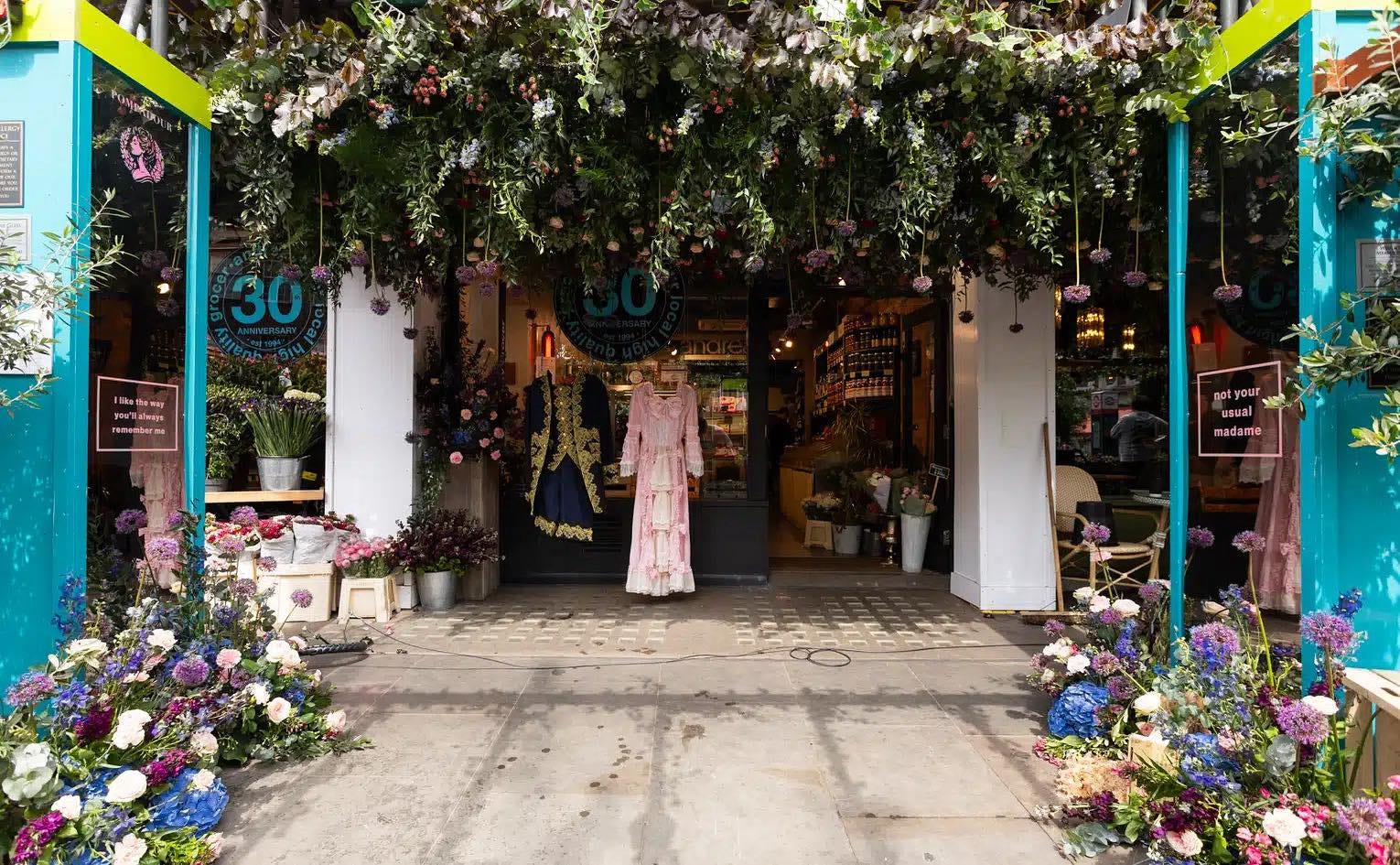
Pompadour. A celebration of Madame de Pompadour. A character trait can be considered exemplary when someone holds high status, but that same trait gets chastised and punished when someone doesn't. Madame de Pompadour was a social climber, and she's celebrated for how well she achieved it. For those less successful, they'd be decried.
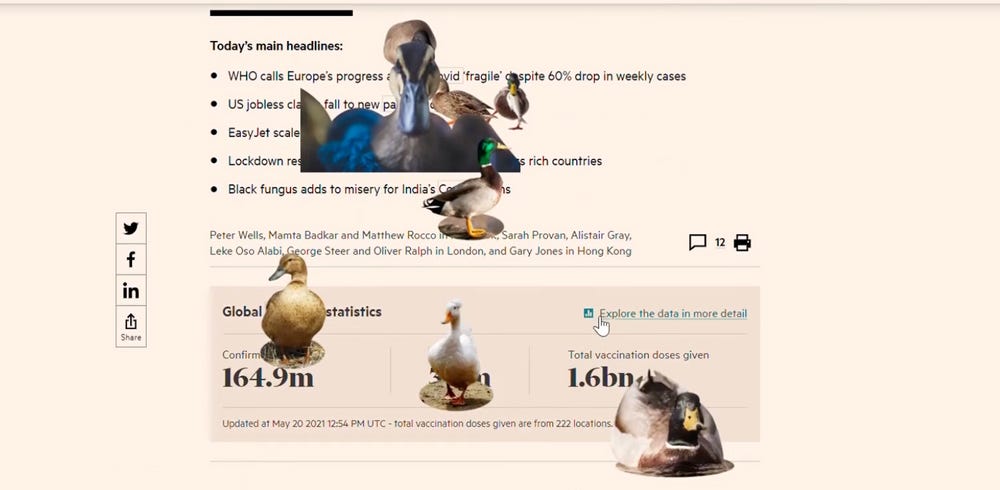
Anti-Quax. An ad blocker released during COVID. The transmission of information follows pathways that are remarkably similar to how viruses travel. The media virus was almost as powerful as the virus itself. During all of this, I could still walk out into Hyde Park and see the ducks sat in the Serpentine, completely unbothered. So this piece of software covered any references to COVID, viruses, or related terms with a picture of a duck while you were browsing. The name is a three-layered pun.
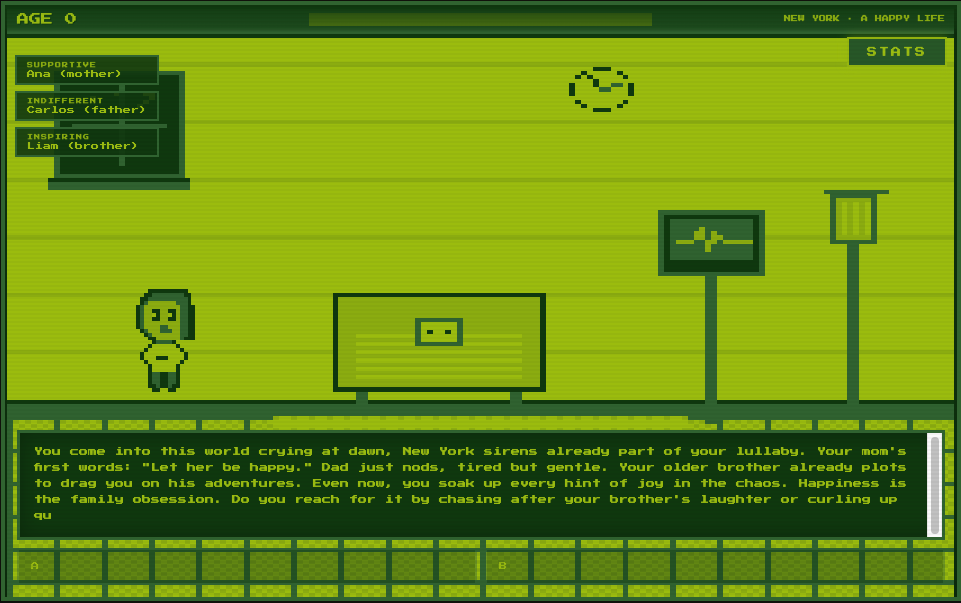
Dreamland. We are voyeuristic about the lives of other people, but we rarely think about the difficulties they went through to get there. We imagine taking different routes in life, but we never imagine what that would feel like from a different starting position. Dreamland lets you pretend to be someone and play through the most critical moments of their existence. I’ve been building it in public. It’s had some updates, and the leaderboard is below.
I think all of these projects help me understand what it is I’m trying to uncover.
I’ve got a good idea of what it is now. I might never fully understand it. But they help me understand my toolset and how I operate in reality. The paintings are the thing that keep me alive. The installations are the thing that help me get to know people. But these smaller, more experimental works help me understand what it is I’m trying to say.

Pompadour helped me win an award at the Chelsea Flower Show. Dreamland has had people playing on it daily. I don’t know what the molasses is in my sugar, but I do know that my sugar is something to do with perception, interaction, freedom, identity, and control. I’m trying to understand what it is that moves something in here, so that I can make myself a better artist.
These experiments are as fundamental to my work as anything else I make.
I’m sure at some point, when the art market and I have to collude at a deeper level, the curators and gallerists are going to tell me I need to present one thing because that’s the best way for the market to understand me. But it’s not. That’s just the best way to commercialise my work. And I don’t think anyone reading this newsletter is here to cash in on what I’m doing. I think you’re here because something I’m doing is interesting to you.
So I want to show you what I believe moves the needle for me the most. It’s this weird stuff. The stuff you can only see when you come to the studio, because I haven’t figured out how to show it to the world yet. When people do come, and they realise the things they’re seeing are a year old — that Dreamland is relatively new, but the rabbit hole goes much deeper — that’s probably the best way to understand what I actually do on a day-to-day basis.
I’m trying to figure out ways to communicate and understand myself. All of these things help me understand that something.

Next week I’ll be talking about paintings, and then from mid-March we’ll be going back to our core process.
Enjoy.
Love you Loads
- R x