


This fucker next to me won’t shut up.
I’m sick of hearing their bullshit.
Nothing they’ve said makes sense.
Well, that’s not 100% true.
It does make sense
but only here
now
when nobody else is involved.
They’ve read some spurious paper on the internet
and decided to base their whole personality on it.
Remote agreement between a bunch of people
who have no idea how the world works.
I’ve been here a month.
Every day, the same narrative.
But it’s just here.
At first I tried to disagree
but they’re so insistent
so noisy with their views
but from what I can see
they don’t amount to anything.
Noise from the hilltop
about how the ground looks.
Maybe they’re the only ones that can see.
But.
It’s one thing to see from above.
It’s another to keep that perspective from down here.
They might be right.
That might be how it is.
But once you’re here
on the ground
things start looking very different.
And the higher you get
the further away from this you are.
Maybe being able to see how things are
is exactly what happens
when you put the spade down.
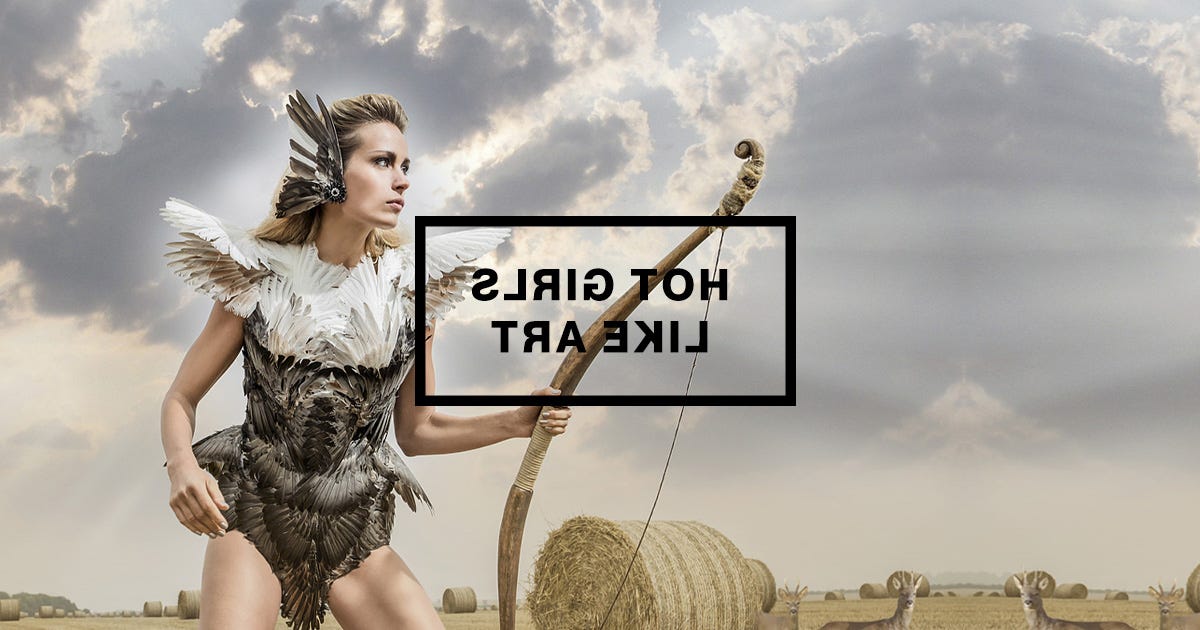
What the hell does an archer know about farming anyway?
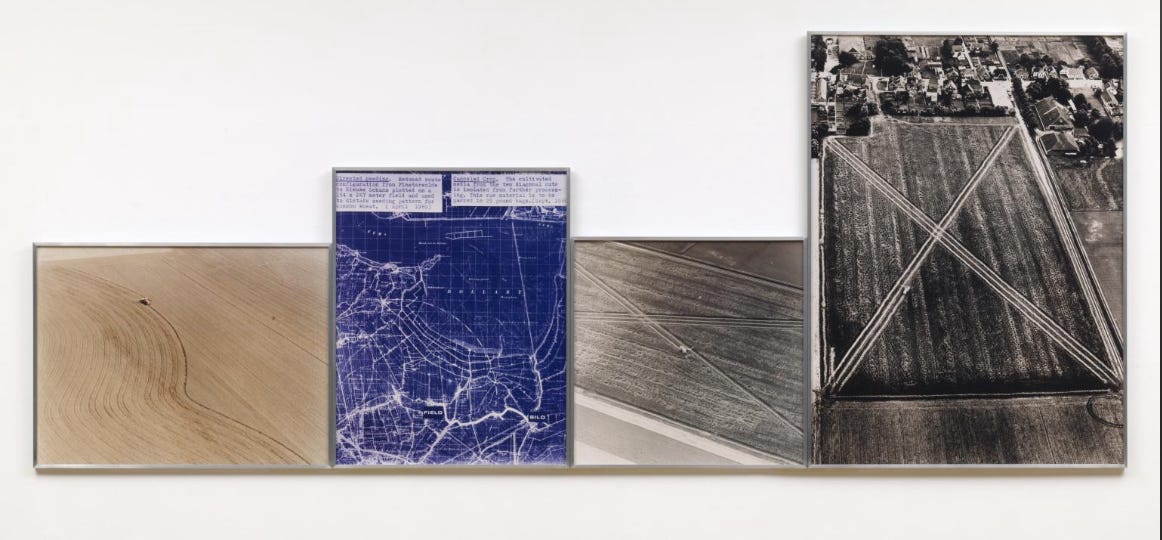
These fields,
I’ve ploughed them for years.
And them
sat up there
watching.
Seasons pass. Summer they wear cloth, winter they wear fur.
Let’s see those gloved hands dig out the harvest after the summer we’ve had.
Nobody is attacking the castle in the rain.
But I’m out here,
spade in the ground
praying the water has finally got deep enough
that I’ll have food next year.
Deep enough down
so we all do.
But I’m grateful.
No digging
means I got some time up here
and I’m starting to see what they see.
I hope I stay long enough to learn what I need to
but leave in time
to not lose what I once had.
Consensus Reality
Last week we talked about the rarity of the individual experience.
How our senses and experience define how differently you and I see the world.1
This week I’ve been looking into how we make sense of this as a group.
As solitary as our existence is as humans, for longer than we have been human, we have been reliant on the pack to make sense of our senses.
I’m sure you’re already thinking about mimesis and the proliferation of actions through culture. We will get there.
For now we assume that two individuals, our equivalent of Adam and Eve, have turned up and are trying to make sense of the world.
They are unique
varied
and require one another.
Beautiful
fragile
alone.
Adam and Eve have different needs and different abilities, and while they agree about much, much they do not.
I’m sure you can relate.
But this variation, and the agreements between them, is at the core of how we build consensus reality.
There is little more important than this relationship.
Adam is the hands. Eve is the eyes. That’s the first thing they agree on.
Adam’s role is to forage. To find.
In the day, he goes and finds food.
He brings it back
and together they assess whether it is good.
If they were to both try all the items Adam finds,
the poisons he accidentally picks up
may affect Eve.
So he begins to test them before bringing them back.
A nibble of something here,
a taste of something there.
If he becomes ill,
don’t bring it back.
If it tastes good,
get more.
Eve, our second filter, can now only consume what doesn’t kill Adam.

Content that Adam has not killed her with his findings,
Eve is happy.
Until one day she notices
a small fruit,
delicious,
beautiful,
but only one.
And tonight, Adam is not hungry.
So how many did he have before he came back?
Pack
“one is all right, two is too many, three is not enough.”
Lately Adam has been hanging around with his friends. Adams.
They forage together.
A while ago, one of them was walking past a tree with an Adam at its base. He had fallen ill after eating something from the tree. Adam understood that this Adam was inexperienced and needed help. He showed him where to find things to take back, and in return the lesser Adam would help him carry things back.
Adams out foraging found it easy to work together. Similarities in preference were established, and over time they understood that they, as Adams, had a lot in common.
One day the Adams went out further than they had gone before. Together they could travel further and risk coming back after nightfall. Eventually they found what they were looking for. A tree so grand that it carried enough for them all to eat for a lifetime. Tall, beautiful, strong. They stood at the base of the tree in admiration. It had everything they wanted. Together they had agreed that an Adam should be big and strong, so that he could climb and find. They had also agreed that the more an Adam could carry, the better that Adam was, and this tree knew how to carry. The Adam tree was everything they sought in this world.

They ate what they could, then came back with their woven baskets full. The Eves that evening ate the fruit, but it wasn’t the same reaction. The fruit, plentiful and delicious, made them feel unwell.
The Adams had an issue. Together they had agreed that this tree solved everything. A tougher journey, yes. But now their food problem had been solved.
But the Eves, less so. This was not what they needed. If anything, they preferred the rarer, less plentiful fruit that gave them what they needed. For the Adams, these sparse items were insufficient. How can an Adam be big and strong with this amount of forage?
The Eves needed to find a solution. Together they realised that the colour of the new items was not correct. The green items were not what they needed. Red. That’s the good stuff.

They sent the Adams out for red.
Season
If I see a red fruit again, do I eat or pick?
But things change over time and space.
An apple picked too early in summer might be perfect by autumn.
Just like that first love who was clearly the right person at the wrong time.
Equally, the where.
A martini is a great drink.2 A nice bar, on a date, you’re about to have a lot of fun. At work, in a board meeting, things may not be looking good for you in a few minutes.

While these personal journeys across time and space allow us to build up a more coherent perspective of reality, we are limited by the time we have on this planet.
And the human lifespan is much too short for how good the experience could be if we got it right.
So we found a way to share, to make it easier, to be more efficient.
In 1935 Muzafer Sherif sat people in a dark room and showed them a static source of light. Over time it looked like it moved. When he asked them how far it moved they would give a number. When he asked them alone the distances of movement were varied and broad. When he asked the group, the numbers converged. When he asked the same people alone, they would give the group’s number. The light didn’t move, but the groups had found agreement. Packs are useful because we no longer have to measure and check everything ourselves. They become dangerous when we eventually stop measuring.
And these agreements about how to experience reality ‘help’ us. But they also narrow our experiences. What if everything has changed? What then?
Incumbent ideas are developed by those who have benefited from them so far. But what if I really like blue fruit, and my Eve does too?
Does anyone want to go look for blue fruit together?
Or are you too scared to not be part of the pack?
Fear
The scale of the pack determines the efficiency of the consensus between them.
A hundred Adams that can find, forage and retrieve effectively is more reliable than a single Adam. But that doesn’t mean it’s the best. Just the biggest.
But a hundred people on the same hill still only gives you the view from the hill.
Over time the human mind has equated the scale of the pack with the safety of the path.
In riskier environments, it is generally better to stay on the path that others have worn.
In less risky environments, one can travel around freely and explore.
The more fearful we are, the closer we get to the pack.

When humans get shot at or mortared, they bunch up.
I used to love watching my teams operate at night.3
Reality changes very quickly when you become nocturnal.
At the start of a training run, they would bunch, clumsily bumping into each other while stacking outside a house.
By the time they became comfortable at night, they’d be able to give each other room to move.
As fear went down, so did their need for security from one another.
This fear exists in society.
We are all scared.
Scared of dying.
Scared of going hungry.
Scared of not finding love.
And as such, we find the pack.
It is these urges that make us follow.
These insecurities.
They are baked into us.
But once we find the pack
we have to learn what they believe reality looks like.
On a dating app we all agree, by ranking together, what a good photo looks like, and this filters reality down before anyone even meets.

In a bar, the agreements around what we want run deeper, but they’re not written down.
But in both places the rules exist and consensus has been established.
Final Words
There are rules of the road for every given environment.
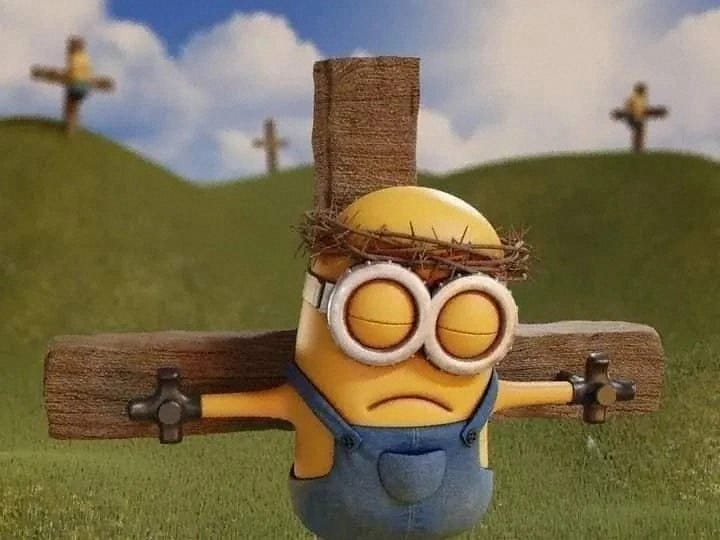
And the only way to be free
is to leave the path.
But be warned.
There may not be fruit where you are going.
But if there is,
others will come.
This week I’m looking into the next layer of how we abstract reality to experience it by picking away at how consensus reality becomes culture.
Love you loads,
Your obedient servant,
Russ x
p.s. Is this a better time to send these out?
hit reply, let me know.
Let, See == Experience. It’s just nicer to focus on a single sensory environment, and as a visual artist I will from here on use seeing as the primary sensory environment. As many of you know, I started as a dancer. I am still a dancer, and as such I am equally proud of my emotive and kinaesthetic experiences. Feel free to swap the sensory experiences for a modal domain that you prefer. (Too many words? You can swap the senses in my essays for other senses, seeing, hearing, tasting, feeling or touching can all be interchanged, but not thinking, which is distinct.)
The rule for martinis is as follows: “One is all right, two is too many, three is not enough.
Working in a night environment for a sustained period is still one of my favourite experiences. The speed at which you learn about yourself and how you think is something I will forever be grateful for.