


Fog.
Mist.
I want to stay where I am.
But the phone alarm has sounded,
cueing my daily cocktail of cortisol and adrenaline,
as the iPhone force-feeds its auditory screwdriver into my brain.
I realise I have no choice,
and the pain I expect subsides.
It’s pointless,
an umbrella in this weather.
The water is already on my face.
It isn’t falling on me.
It’s hovering,
floating,
waiting
for me to fall into it.
It’s so confident,
like a bear at the creek.
I am the salmon,
destined to end up in its paws.
I’ve staggered through the mist enough times
to know I don’t know anything.
There are days I ignore the alarm,
but I stopped doing that after I saw the blind kid.
I still don’t know how he got to the station,
but he was there before me.
I followed him for a while,
until my boss called
and told me he would fire me.
But before that,
I watched the kid walk,
and I thought it was impressive
he just kept walking
smiling
like he always knew where he was going,
even though he couldn’t see.
I can see.
My eyesight is 20/20.
I’ve never had any issues,
and even then
I have no idea.
Sometimes I just start walking,
and I look up and think,
“wow,
this place sucks,
what am I doing here?”
That’s because of the mist,
I think.
Water droplets of distraction,
pecking at my face until I squint,
pulling me in directions
that aren’t where I want to be.
I probably know where I want to be
I’ve seen it, you know.
In those vivid moments of clarity,
Haven’t we all?
The sun comes out
and burns it away
and then you can see:
the friends you have,
the friends you’ve had,
the places you’ve been,
the places you’re going,
for a moment,
that feels like forever,
It’s all so clear.
But when I look at the blind kid,
I can see
he never sees that.
And for some reason,
he knows where to go.
And I’m here,
and I don’t.
Maybe I look too much,
I see.
I think.
So I close my eyes,
and lose my balance.
It can’t be that.
Because he hasn’t fallen onto the tracks,
but I would.
I’ve got to look where I’m going.
If not,
anything could happen.
But him,
he just walks.
When I try that,
I get lost.
But he can’t.
He never does.
He just keeps walking
with that stupid smile on his face.
and I stand here
watching him
while the mist rains on my face
He just keeps walking
with that stupid smile on his face.
And I stand at the edge,
reading the yellow line like it’s scripture,
while the mist beads on my face,
and the train arrives,
exactly on time.
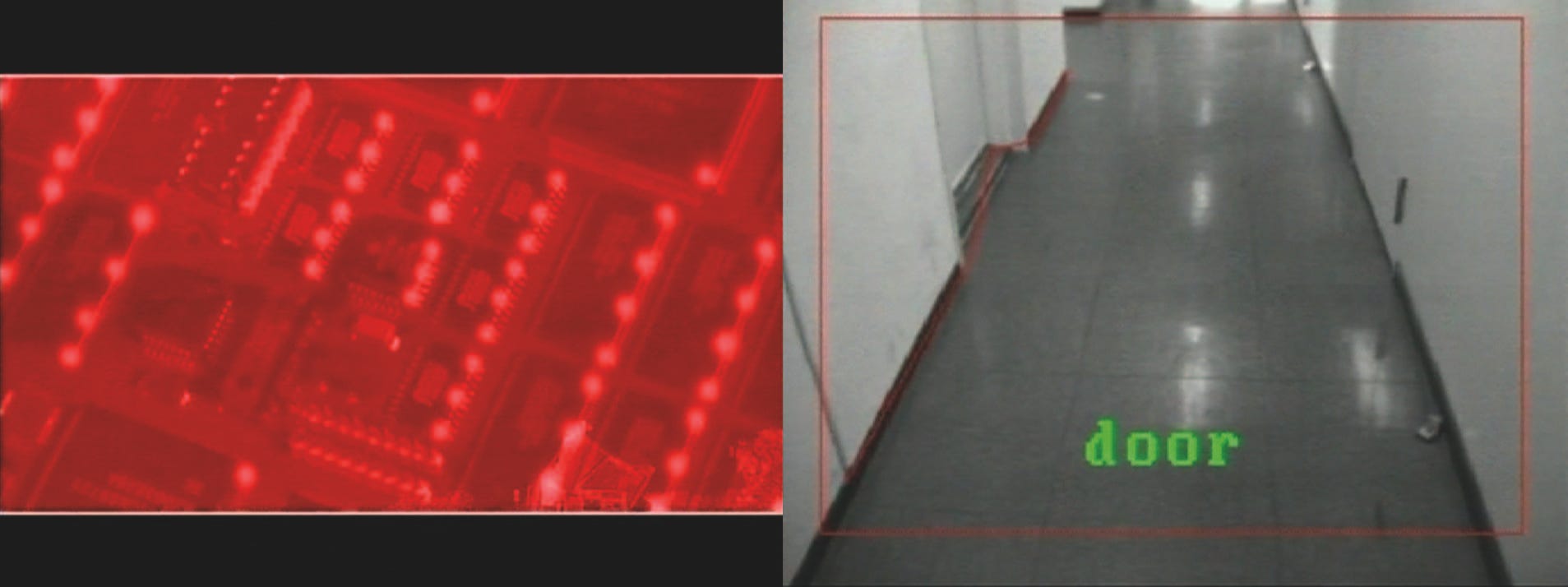
Perception
Often, the fog isn’t caused by the weather.
It isn’t even external.
It’s my attention.
It’s the part of me that wants to see everything,
so I don’t have to make a choice.
I flip from space to space.
A million unresolved me’s,
all competing to exist.
They tell you you can be anything you want,
but only one of them gets to be you this time.
Greed has a way of sneaking up on you.
Mr Benn was a lucky man.
Every day, something new.
I thought art would be that for me,
but eventually we all must find a thread to tie ourselves to,
or the minotaur will surely find us,
as we get lost in the labyrinth of life.
As we move around,
and see novel perspectives,
we learn.
And that learning
eventually manifests in our lives as perception.
Perception is what appears, moment to moment.
Perspective is the stance that ranks it.
Awareness is the part of you that can watch both happening.
Together they form a loop:
your perspective decides what gets lit up,
perception gives you the “evidence”,
And our awareness is the only thing that lets us notice
mid-flow.
This is Week One of a five week deep dive into perception.
Over the coming four weeks, I’m going to explore one of my favourite facts about reality: it’s subjectivity.
Time, position, outlook, expectation.
They all change what we see, and what we understand.
The human mind is an inaccurate and limited instrument for observing reality.
It struggles to think cleanly across time.
Its memory is narrow.
And for the most part, it is guided by fear and ambition.
As such,
how it perceives reality,
and the perspectives it takes,
are often flawed.
But it is a social animal.
And what it lacks in bravery
it makes up for in communication.
In its ability to connect
to itself
and to those around it,
friend or foe.
Humans communicate more than anything else.
It’s through this sharing of perspectives,
and awareness of our limitations and desires,
that we’ve managed to build a shared reality
that we not only rely on,
but have learned to shape,
to have a better experience,
alone,
and together.

But over time,
this learning,
of shaping,
has meant that there is now enough to shape us all.
To format our experience.
To draw a yellow line around reality.
Unless we learn how to perceive
when the truth is missing,
we will be blindsided by the coming times.
I’ve always believed art can change the world.
That by being placed in the right position,
and with enough eyes on it,
it can open up the world,
to becoming more conscious,
more aware,
more able to retain its freedom.
But as art battles against a world outlook that values it less and less,
we maybe have to find a way
to give it the resources it needs
to keep us all free.
Coming up
Over the next four weeks, I’m going to try to get to the bottom of why this is relevant and see if I can take my reading to a point of value and hopefully prove that art can change the world.
We’ll be covering the following syllabus. If you want to read along, the URLs for next week are also attached:
Week 1 - Your Identity Is the Battlefield
identity for sale
Reading
Power | Prediction | Capture
Shoshana Zuboff — The Age of Surveillance Capitalism (2019)
https://www.publicaffairsbooks.com/titles/shoshana-zuboff/the-age-of-surveillance-capitalism/9781610395694/
Mask | Performance | Control
Erving Goffman — The Presentation of Self in Everyday Life (1956)
https://en.wikipedia.org/wiki/The_Presentation_of_Self_in_Everyday_Life
Discipline | Visibility | Identity
Michel Foucault — Discipline and Punish (1975)
https://www.penguinrandomhouse.com/books/55026/discipline-and-punish-by-michel-foucault-and-alan-sheridan/
Self | Model | Illusion
Thomas Metzinger — The Ego Tunnel (2009)
https://www.basicbooks.com/titles/thomas-metzinger/the-ego-tunnel/9780465020690/
Prediction | Selfhood | Stability
Anil Seth — Being You (2021)
https://www.anilseth.com/being-you/
Vision | Infrastructure | Power
Trevor Paglen — “Invisible Images (Your Pictures Are Looking at You)” (2016)
https://thenewinquiry.com/invisible-images-your-pictures-are-looking-at-you/
Art
Mirror | Interpellation | Label
Barbara Kruger — Untitled (Your body is a battleground) (1989)
https://www.thebroad.org/art/barbara-kruger/untitled-your-body-battleground
Network | Diagram | Capture
Mark Lombardi — artist page / selected works
https://www.pierogi2000.com/artists/mark-lombardi/
Archive | Evidence | Counterpower
Forensic Architecture — Investigations index
https://forensic-architecture.org/
Self | Image | Multiplicity
Cindy Sherman — The Complete Untitled Film Stills (1977–80)
https://www.moma.org/calendar/exhibitions/253
Media
Fame | Doubling | Fracture
Perfect Blue (1997)
https://en.wikipedia.org/wiki/Perfect_Blue
Status | Scoring | Compliance
“Nosedive” (Black Mirror) (2016)
https://en.wikipedia.org/wiki/Nosedive_(Black_Mirror)
Overlay | Ideology | Obedience
They Live (1988)
https://en.wikipedia.org/wiki/They_Live
Poetry
Gaze | Command | Change
Rainer Maria Rilke — “Archaic Torso of Apollo” (1908)
https://www.poetryfoundation.org/poems/1679348/archaic-torso-of-apollo
Extra Credit
Identity | Meme | Contagion
René Girard — mimetic theory (overview)
https://iep.utm.edu/girard/
Self | Signal | Status
“Face” (sociological concept) — overview
https://en.wikipedia.org/wiki/Face_(sociological_concept)
Interface | Power | Default
Don Norman — The Design of Everyday Things (2013 ed.)
https://mitpress.mit.edu/9780262525671/the-design-of-everyday-things/
Week 2 - The Shadows Show You What’s Missing
omission, legibility, negative space
Reading
Image | Politics | Framing
John Berger — Ways of Seeing (1972)
State | Legibility | Erasure
James C. Scott — Seeing Like a State (1998)
Camera | Appetite | Distance
Susan Sontag — On Photography (1977)
Modernism | Repression | Return
Rosalind Krauss — The Optical Unconscious (1993)
Spectacle | Mediation | Substitution
Guy Debord — The Society of the Spectacle (1967)
Gaze | Alienation | Mask
Frantz Fanon — Black Skin, White Masks (1952)
Art
Silence | Memorial | Absence
Doris Salcedo — Shibboleth (2007)
Archive | Void | Witness
Christian Boltanski — archive works (various)
Light | Blindness | Overexposure
James Turrell — Ganzfeld works (various)
Erasure | Labour | Trace
Robert Rauschenberg — Erased de Kooning Drawing (1953)
Media
Detail | Ambiguity | Projection
Blow-Up (1966)
Omission | Pressure | Guilt
Caché (2005)
Surveillance | Paranoia | Fabrication
The Conversation (1974)
Poetry
Time | Absence | Echo
T. S. Eliot — “Burnt Norton” (1936)
Extra Credit
Shadow | Empire | Archive
Allan Sekula — Fish Story (1995)
Noise | Signal | Control
Claude Shannon — “A Mathematical Theory of Communication” (1948)
Blackout | Censorship | Form
Jenny Holzer — Redaction Paintings (various)
Week 3 - Learning How to Make Fire
Trained perception
Reading
Attention | Selection | Reality
William James — The Principles of Psychology (1890)
World | Affordance | Action
James J. Gibson — The Ecological Approach to Visual Perception (1979)
Discipline | Attention | Grace
Simone Weil — “Attention and Will” (1947)
Attention | Capture | Resistance
Matthew B. Crawford — The World Beyond Your Head (2015)
Training | Focus | Resilience
Amishi Jha — Peak Mind (2021)
Refusal | Attention | Freedom
Jenny Odell — How to Do Nothing (2019)
Art
Duration | Presence | Training
Marina Abramović — The Artist Is Present (2010)
Repetition | Gesture | Mind
On Kawara — Today series (1966–2014)
Horizon | Attention | Calibration
James Turrell — Roden Crater (ongoing)
Field | Breath | Sensation
Agnes Martin — paintings (various)
Media
Speed | Pattern | Shock
Koyaanisqatsi (1982)
Memory | Montage | Drift
Sans Soleil (1983)
Zone | Navigation | Faith
Stalker (1979)
Poetry
Object | Precision | World
William Carlos Williams — “The Red Wheelbarrow” (1923)
Extra Credit
Silence | Frame | Hearing
John Cage — 4’33” (1952)
Solitude | Pressure | Thought
Blaise Pascal — solitude fragment (context)
Training | Pain | Choice
Miyamoto Musashi — The Book of Five Rings (1645)
Week 4 - Perceptual Sovereignty
Perceptual range is freedom
Reading
War | Vision | Logistics
Paul Virilio — War and Cinema (1989)
Medium | Environment | Shaping
Marshall McLuhan & Quentin Fiore — The Medium is the Massage (1967)
Environment | Persuasion | Totality
Jacques Ellul — Propaganda (1965)
Control | Interior | Consent
Byung-Chul Han — Psychopolitics (2017)
Prediction | Priors | Worldmaking
Andy Clark — Surfing Uncertainty (2015)
Circulation | Degradation | Power
Hito Steyerl — “In Defense of the Poor Image” (2009)
Art
Counterview | Archive | Exposure
Trevor Paglen — surveillance works (various)
Map | Power | Topology
Mark Lombardi — network drawings (1990s)
Machine | Vision | Targeting
Harun Farocki — Eye/Machine (2001–03)
Protocol | Freedom | Constraint
Yoko Ono — Grapefruit (1964)
Media
Language | Time | Rewriting
Arrival (2016)
Alien | Perception | Exposure
Under the Skin (2013)
Network | Self | Shell
Ghost in the Shell (1995)
Poetry
Plurality | Seeing | Freedom
Wallace Stevens — “Thirteen Ways of Looking at a Blackbird” (1917)
Extra Credit
Interface | Power | Default
Don Norman — The Design of Everyday Things (2013 ed.)
Encryption | Politics | Perception
Whitfield Diffie & Martin Hellman — “New Directions in Cryptography” (1976)
Maps | War | Optics
Eyal Weizman — Hollow Land (2007)
Freedom never came for free
If you like the work, share it around.
Hope you enjoy the ride.
Peace and love,
R
p.s. I’ve got a piece of public art going up in East Village, London - opens Jan 10th, It’s a risky one and the last iteration of my Villain campaign… let’s see how the area reacts.
p.p.s Merry Christmas, Happy Holidays. sorry no Christmas memes, I’m still in work mode for a few more days.