


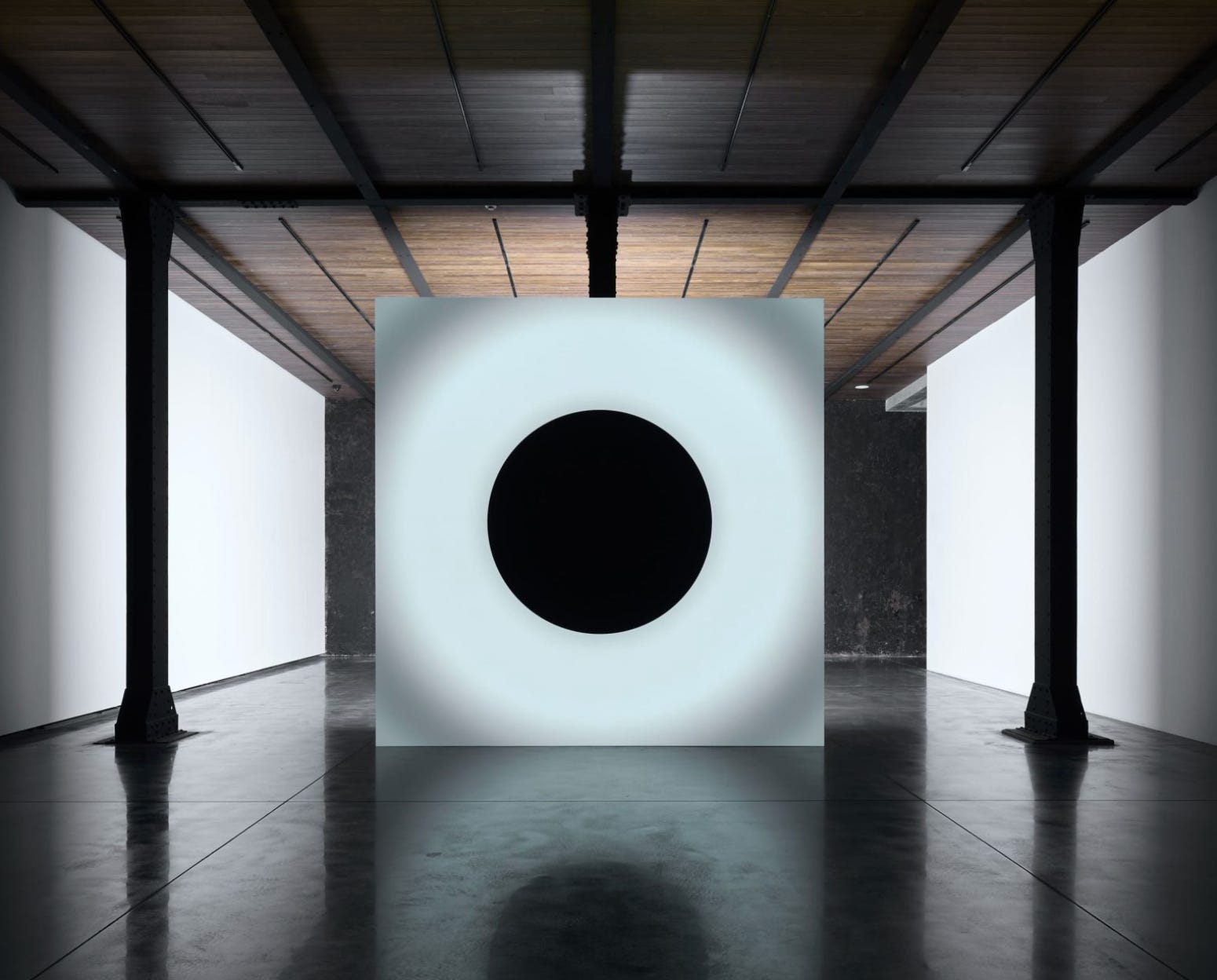
It’s certainly not the same as when I started,
but I guess whenever you look at anything
for long enough,
it changes shape.

I think it’s that one day
I looked at it,
and I realised
I liked the way
it looked at me.
I think it saw me
as much as
I saw it,
and maybe
it’s still looking,
but, I’m not sure.
All I’m sure of
is that I’m
still looking
at it.

I wish there were a way to understand
whether it’s me changing,
or it’s changing,
but the reality is,
I can’t stop looking at it,
and it can’t stop changing.
I don’t know when I realised it was changing,
but it was definitely after I realised I was sat here looking at it,
and at the start it made me feel a little bit queasy,
but I thought that feeling was going to go away,
and now the feeling seems to be the only feeling left,
and it seems to be changing quite a lot more than it used to change,
but I’m looking at it a lot more as well.
Even though the feeling at the pit of my stomach isn’t something I like,
it seems to be growing quite a lot more,
at the same time
the thing I’m looking at is changing.
I’m tugging,
I’m pulling,
I’m pawing,
I’m struggling,
I’m yawing,
I’m clawing
I’m doing everything I can
to figure out how to stop this thing changing,
or keep it changing
but changing into something
that stops the feeling
that keeps growing
in my stomach,
but it seems
that both the thing changing
and me staring at it
are things I can’t change a lot
until the feeling resolves.

I’ve tried not looking.
I’ve tried looking away.
I’ve tried looking elsewhere.
But the feeling stays,
it goes a little bit,
and eventually I end up having to look at it again,
and as soon as I look at it,
the feeling comes back stronger.
I’m not sure if this is the problem or not,
but…
I know I’ve got to look at it.
I’ve got to keep looking at it.
I’ve got to keep looking at it for a long time
until the feeling eventually leaves.
But the problem is,
I don’t like the feeling,
because there’s a small part of me that thinks the feeling is telling me something isn’t quite right,
and no matter what happens from here,
I’m about to feel something I don’t want to feel,
and there’s no way around it.
No neat trick,
no blindfold that I get to put on and never look at it ever again,
because I’ve looked at this thing enough to know that I’m probably never going to forget it,
in fact I know I will never forget this thing.
There’s a part of me seeing that this is happening
that happened a long time before I admitted that this was happening.
And that’s the thing that I’m starting to see here.
And even though I’m looking at it,
this is the thing that I’m starting to see more and more.

And the more I look at it,
the more I seem to see it.
But every time I look at it,
the feeling gets worse,
worse maybe not the right word,
but it’s definitely not a feeling I’m enjoying feeling,
and when I started looking at this thing,
I loved looking at it,
I really loved looking at it,
and I still love looking at it,
but the feeling it gives me,
the one I can’t quite explain,
seems to be growing quite a lot as well.
Maybe it’s just the byproduct of looking at something for too long,
but I thought that that feeling would come a lot later than this,
because in my head I’ve only just started looking at it,
and even though I’ve only just started looking at it,
the feeling I’m getting back from it,
when it notices that I’m looking,
is that something’s not right,
and it’s all really bad.
And I’ve been sat here looking at it for a long time.
My friends know I’ve been sat here looking at it.
And I think they’ve started to realise that I’m hiding something about what I’m seeing when I look at it.
I think at the start I would hide it well.
But I’m finding it hard to hide things like that anymore.
Everyone knows I’ve been sat here looking at it.

Some people even said,
wow,
you’re really looking at that for a long time,
you must really like it,
and I did,
and I do,
but I haven’t told everyone about the feeling in my stomach.
And I really really hope that now that I’ve realised the feeling in my stomach when I look at this,
and how much I love looking at it,
come together,
that something manages to tell me,
”hey!”,
maybe that feeling in your stomach is that you just need a glass of water,
and a good night’s sleep,
and in the morning it’ll go,
and when you look at it,
it’s gonna feel great,
but I’m not too sure
that’s what happens here,
because I know
I’m going to look at it again.
and I think
that’s what makes
the feeling in my stomach
not go away.

Awareness
Week II (perception?)
I think when we think about the sensory experience we go through,
we often think that a broader or more detailed sensory experience is better.
Seeing further,
seeing deeper,
being able to smell more,
taste more,
hear more.
It all kind of seems that the more that we have,
the better the experience is.
And I think for the most part that’s true,
apart from perception,
that cognitive sight of the unspoken or unseen.
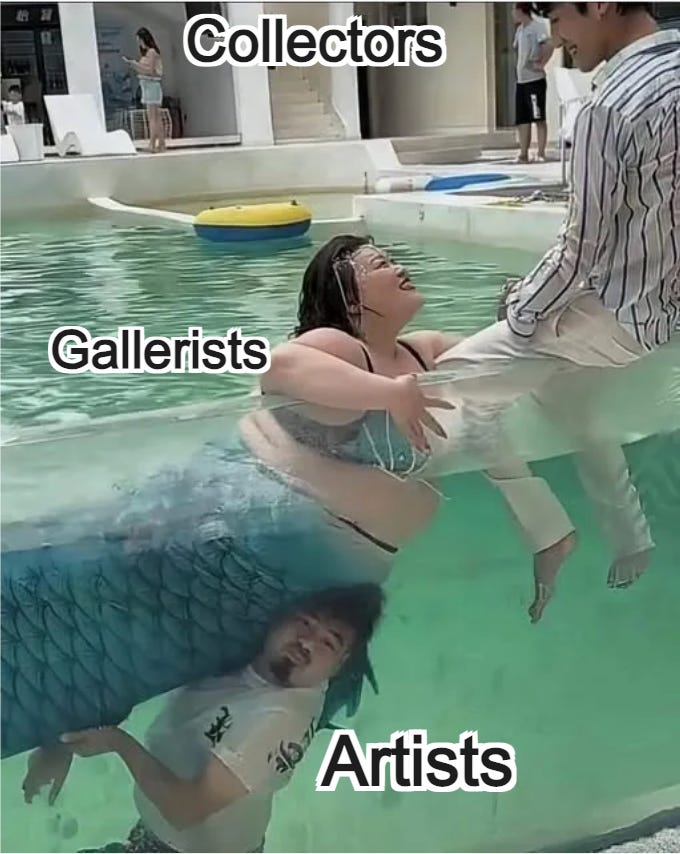
To be able to see intention,
to be able to predict and assume,
to be able to perceive,
those are all things that should,
if they were like the other senses,
benefit you in the same way.
But I’m not too sure that’s the way it looks.
It’s certainly not the way it is.
Perception and awareness aren’t the same thing,
they’re very related,
but they’re not quite the same system.
From my perspective,
awareness is the overall field,
the total space in which experience occurs,
whereas perception is the processing of that field.
Awareness is the raw footage.
Perception is the director’s cut.
Perception has filters,
meaning,
interpretation,
an intellectual quality that tries to understand
what the awareness is simply observing.
And everything that hurts us psychologically
sits exactly at that junction,
right where perception overlays the raw field of awareness.
It’s the understanding
that brings the pain.

There are three key layers to perception.
First, the sensory perception,
the part that receives data
through the eyes,
the ears,
the body.
Second, the cognitive perception,
the part that decides
what the data means.
Third, the narrative perception,
the part that tells a story
about what the interpretation means
about me,
my life,
my future,
my world.
It’s easy to confuse the three.
When I talk about seeing intention,
or perceiving the unspoken,
or noticing the things that look back at us,
I’m describing the perception
that happens between layers two and three,
the layers that interact directly with awareness.
They’re different from the sensory perception
that comes through the raw senses.
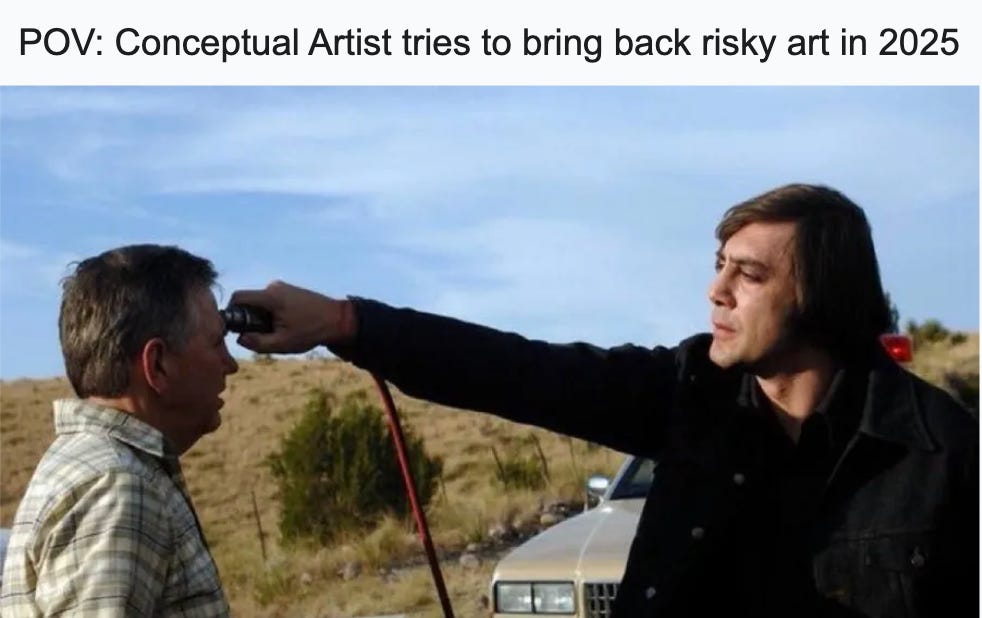
The problem doesn’t usually come from the senses.
It comes from the cognitive and narrative layers,
when the predictive parts of the mind and nervous system
become too attuned to intention,
too quick,
too sharp.
You start seeing meaning
before the world reveals it.
That’s what creates the anticipatory dread.1
That’s what forms the feeling in the stomach.
That’s where the sense of inevitability comes from.
It’s the nervous system and the brain
perceiving patterns
before they appear.2
Awareness has a neutrality that protects you,
even when the awareness is intense,
psychedelic,
meditative,
or emotionally traumatic.
There’s a neutrality to awareness3
because awareness isn’t trying to understand anything,
it’s simply aware.

Perception doesn’t work like that.
Perception has biases,
conditions,
familiar pathways,
threat detection,
memory,
desire,
fear.
Perception tries to make sense of the field
in a way that awareness never does.
That’s why when we apply awareness to something,
we can hold it
without suffering,
but once perception begins to focus on it,
interpret it,
fix meaning to it,
the hurt starts to appear.
Awareness says,
“Something is happening.”
Perception says,
“I think I know what this means.”
Narrative perception goes even deeper,
and says,
“I think I know what this means about me and my life.”4
That’s where everything becomes personal.
That’s where the danger begins.
The hyper-aware,
hyper-perceptive loop
is an over-interpretation
of simple signals that awareness catches.

Awareness notices something.
Perception interprets it.
Narrative makes it personal.
The emotional response grows.
The emotional response amplifies perception.
Perception feeds back into awareness.
And a spiral forms.
It’s the paradox of having a high perception ability.
Increased sensory input
usually improves the world,
makes experiences richer,
sharper,
more vivid.
But increased perception
especially cognitive and narrative perception
does not.

Because perception gives you
the ability to see intention,
to read signals,
to detect shifts
before anyone else does,
but it also gives you
the ability to anticipate pain
before it arrives.
It gives you the burden
of being right too early,
and the discomfort of knowing
when the world is shifting
before anyone has said a word.
It’s a gift
with a tax.
Awareness is not.
Right now,
I’m trying to balance this increased awareness
of the raw field,
and with that expansion
comes the cost
that my perception,
is getting overloaded,
getting ahead of me,
getting ahead of the moment,
getting ahead of what’s real.
It’s something all high-perception individuals
struggle with,
and I am definitely struggling with it here.
I think everyone struggles with perception
at some point,
and our assumption is always
that we’re right,
that our perception is the truth,
that the meaning we assign
is the meaning that exists.
But being aware
of how perception works,
of how it can be wrong,
of how it can overreach,
of how it can create a storm
out of a signal,
is the first step
towards trusting
that maybe everything is actually okay.

And maybe things do work out,
even if everything that used to look rosy
now looks bleak.
Maybe all you’ve got to do
is keep going.
And maybe being aware of that idea
is the trick.
Not knowing.
But watching.
and believing that’s enough.
Poets Corner
II

Autumn appears like a blink
of dead leaves,
cushioning cracks of slab
and blanketing a safety

with a blanket of threaded
dead leaf and hindsight.
Wrapping wet puddled slabs
of autumn in the blink

of winter’s cold firing squad,
that blasts balloons and buckets of water.

- Thomas May
Final Words
Week 2 of awareness, and it’s a complex journey.

I had wanted to increase my writing and content this week, but I’m a little overloaded with commitments out here to manage it.
What’s interesting is that I thought that the peace and tranquility of Japan would leave me some time to create, quite the opposite, if anything, I’m being pulled into a space that makes me stay up late, produce in a rush and feel a sense of dread that I’m not getting the most out of my time.
Weird loop, clearly my own doing.
Anyway, I’m here for another week, let’s see if I can get myself out of it before I come back to the UK.
Peace and Love
- R x
Further Reading
The brain predicting the world before it arrives is a common area of study. Anil Seth’s Being You is a strong entry point into this idea of predictive processing.
If you want to learn more about awareness as a neutral field and why raw awareness doesn’t hurt, Shinzen Young’s The Science of Enlightenment breaks it down neatly.
If you’ve encountered the traps of the narrative mind creating suffering by turning interpretation into identity, Thomas Metzinger’s The Ego Tunnel is a great exploration.
It’s interesting that the body feels emotions before the mind understands them. Lisa Feldman Barrett’s How Emotions Are Made explains the mechanics beautifully.