


I hate the sound of my alarm.
I hate it more than I hate the people
that make me use it.
It’s like a constant reminder
that at some point,
they got me.
Some marauding force
invaded the sanctuary
of my bedroom
and told me
I have to wake up
right now.
I don’t want to.
I never have.
There has never been
a moment
when I’ve heard that shrill siren
and thought it was good.
They stepped in here
and took something from me.
They know it.
I know it.
But here we are.
Two snoozes deep,
and I’m already late.
I want to do it one more time,
but I can already hear his voice,
muffled
under that disgusting moustache
he wears to look hip.
“Late again.”
Intuitive and original.
So down with the culture.
What a leader.
At least I’m consistent.
There’s little left to do
but face it.
I look into the black glass box
that owns my life
and see the messages.
It seems like a new front has opened up.
I’m fighting with my girlfriend at the moment.

Is this what love is?
A constant battle for autonomy…
I thought love meant
we’d accept each other
for who we are.
I’m not sure who I am.
But whatever it is they want me to be
I am not.
I don’t even know who that is.
And,
I’m sure they don’t either.
When did going on holiday become such a drag?
Isn’t that meant to be the fun bit?
I know better than to answer now.
I’m already late,
and another strike
gives him too much reason
to talk to me again.
There’s a small red circle
with a number in it
that I’m looking forward to tapping into.
Everyone says they hate social media.
Then they make a video about it.
Phonies.
For me,
it’s a route out,
an escape.
Maybe my only one.
I’ve found my people here.
I throw the phone up as I get ready.
“Dear diary”
Tragic, I know.
But the crowd on the other side get me.
You know,
I think they appreciate
how authentic I am.
Crazy.
If my family ever saw this side of me,
they’d disown me.
Maybe they already have.
But at least I’ve got a space to be me.
I finish my soliloquy,
deftly ignoring the barrage of notifications.
Delayed gratification at its best.
I’ll get my hit later.
It’s a good sign.
Someone cares.

I find my fastest walk
and reach the queue of people
stretched around the puddles
at the bus stop
everyone staring at their phones together;
We’re all addicts.
At least I’m pretending I’m not.
I like the bus.
Nobody talks to me here.
It’s just me.
And if I’m late,
it’s no longer my fault.
Aren’t I doing my best?
I’m on it.
Time to answer those messages.
Relationships need watering.
“I thought you wanted to go to Copenhagen.”
I have no interest in Copenhagen.
I know why she wants to go.
My feed is flooded
by the idea that it’s a modern coffee oasis.
I spent my childhood
pac-maning my way
through depressing clubs
in the Midlands.
Unless they plan on changing out the coffee
I doubt it’s going to change anything in my mind
It started with that book about hygge
I see the pride when she mentions it,
“who-gah”.
It’s basically sitting in a coffee shop with a blanket.
I just want to dance on tables.
But at this stage of the relationship,
That’s not a ‘me’ that is allowed out to play,
and certainly not one
invited to this conversation.
“You know it’s my favourite city.”
She’s never been.
This is a trap.
We both know it.
But
I have to take the bait,
because right now
we’re arguing,
and
I know
it will all go away
if I agree to this.
“Of course, let’s do it”

The bus stops,
and I feel the mass of people downstairs
have decided
that they now need
to risk the stairs to the upper floor.
My double seat has become a hot commodity.
I can feel the eyes of the people
coming up the stairs.
I begin to think big thoughts
in the vain hope
that I look like a bad seatmate.
I’m not.
Well, maybe I am.
But right now I can’t risk it.
The phone ringing interrupts
the music playing in my headphones.
I never know what I’m listening to
but I like it.
It’s my boss.
at this hour,
a phone call
bit keen
bit gross.
I know I should answer.
But this can’t be it.
I reject the call and throw my thumbs into the keyboard before he can say anything.
“On the bus, loads of traffic today.”
“Must be the rain.”
There is no traffic.
Sucker.
I need a hit.
Safety.
Respite.
Music on.
Next track.
Volume up.
Low risk options only.
Something reliable
I head to the group chat for updates.
We haven’t seen each other for a while.
Last time we tried,
it was clear something had changed.
But it’s good to reminisce,
live like the old days,
Isn’t it?
We’re all kind of similar like that.
Although,
I try not to mention
the social media stuff.
They don’t like it.
I guess some stuff is just for you,
right?
And maybe if I hit it big,
they’ll get it.
Until then,
it’s not worth the hassle.
Speaking of which
Gratification appropriately delayed
Time for the hit.
I check my notifications.
Strong night.
Something is popping off.
I love the comments section.
Today it’s heated.
It’s getting to that point where I can see what they want to hear.
What they want me to make.
I used to make music videos because I love cinema.
But they don’t really like those videos anymore.
They want me to talk about them.
I used to watch films all the time.
But the cinema feels like a weak date nowadays.
I’d go by myself, but I know everyone would realise I’m weird.
If I won the lottery
I’d build a cinema in my house
and spend every day
watching films by myself.
“I have a feeling that someone nearby is going to find out something about me that will mean the end, although I can’t imagine what that something is.”
-Joseph Heller
The phone rings again.
Why’s he ringing?
Perfect moment to phone detox
I’ll ignore it and look at the messages.
Clearly, he’s excited today.
He loves being a manager.
Doing manager things.
Maybe the company will adopt him.
“Someone saw your videos yesterday.”
“We need to talk.”
Identity as battleground
Our identities are now contested in a way that they never have been before.
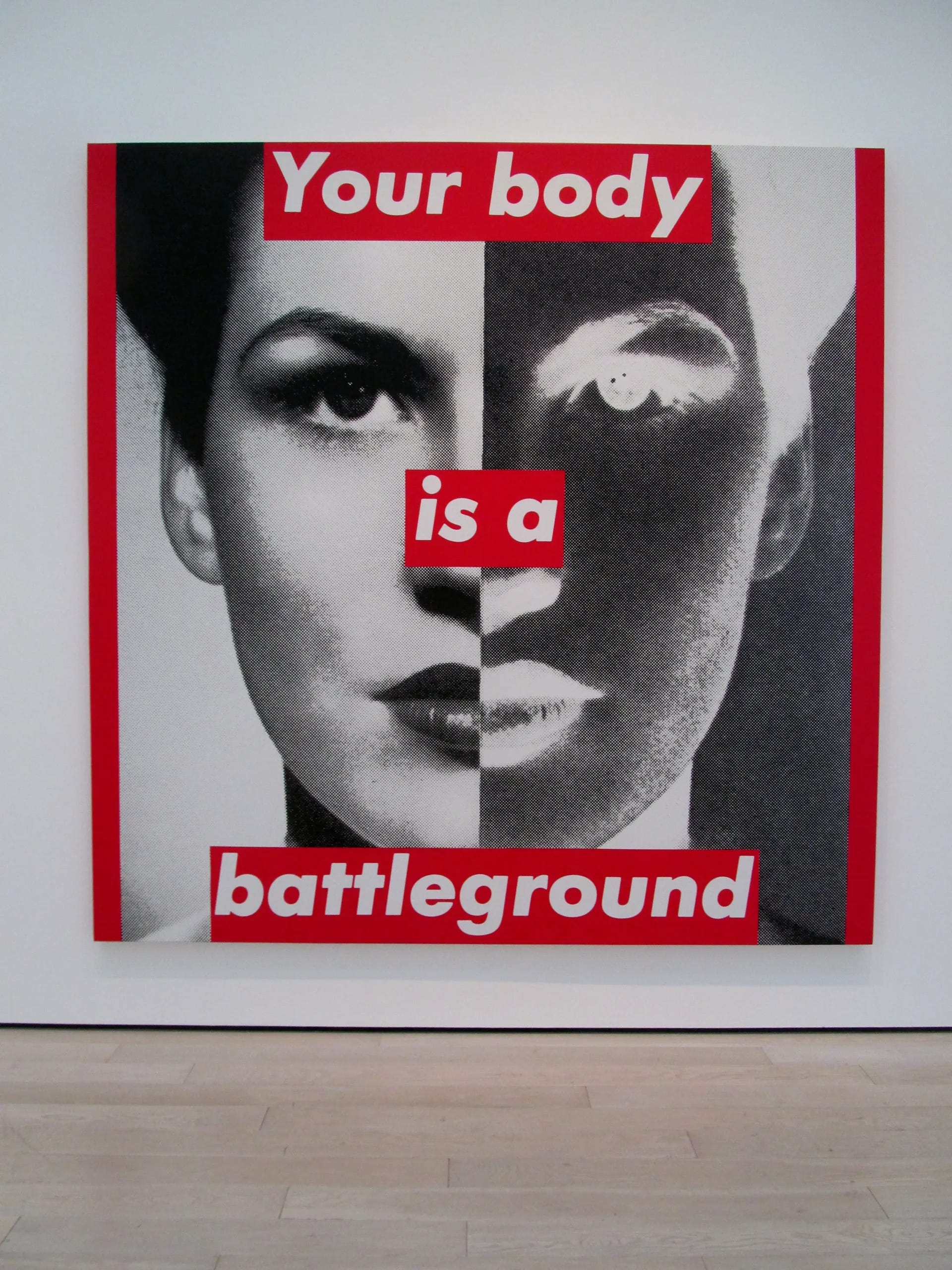
Our desires are shown to us through advertising.
And we are compared to norms and individuals that previously never entered our arena.
The modern world reads and scores us continuously, and it expects performance and adherence to its idea of who we are, no matter where we are in that moment.
We can live five lives without leaving our street, and each one has a different scoring system.
Work.
Friends.
Love.
Family.
Online.
Each arena wants a version of us that makes interaction easy, outcomes predictable, and risk low.
This mismatch is the feeling of being pulled apart.
It’s the delta, the distance between our inner line and what the room expects from us, and the rate of change, how fast we’re expected to switch between versions of ourselves as we move through our days.
When both are high, we pay for it with friction in our nervous system.
The pain isn’t just managing multiple lives.
The pain is switching what we value to survive failure in each one.
Switching makes us feel inconsistent, even when we are trying to be honest.
We signal who we are.
The room scores what they see,
and the self adjusts accordingly.
Signal is what we emit into a situation.
Our tone, timing, posture, clothes, associations, what we choose to reveal, and what we hide.
Score is what the room returns.
Approval, trust, suspicion, status, access.
Sometimes it is a person’s judgement.
Sometimes it is an institution’s risk logic.
Sometimes it is algorithmic routing.
Self is what we internalise.
The model we carry forward into the next room.
The version of us that we begin to associate with “me.”
It isn’t optimising for honesty, it’s only focussed on compliance.
Our identities have become our battleground.
It is a fight over who we should be.
And everyone wants a piece of us.
Every system favours characteristics that make it operate better.
Marketers want our wallets.
Friends want our allegiance.
Businesses want our time.
And the more consistent we are, the easier we are to manage.
Stable people are easier to be around.
Stable people are easier to manage.
Stable people are easier to predict.
Stable people are easier to sort.
Every layer of modern life rewards low variance, even when it costs us range.
And once stability becomes valuable, it becomes contested.
Rooms contest it through face and belonging.
Institutions contest it through visibility and discipline.
Platforms contest it through capture, prediction, and classification.
Until finally, we do the contesting ourselves.
We edit ourselves in advance to keep access open, in the name of emotional maturity and belonging.
But who is it that we want to belong to?
The Stage
It’s hard to say things that will get us kicked out of the room.

We’re social beings,
and generally we want to stay inside the rooms we’ve joined.
Exclusion is social death.
Our nervous system treats it as real.
It’s bodily.
It’s the tightness in our chest when we enter somewhere unfamiliar.
The way our accent changes to communicate.
The way we check our posture.
The way we laugh at the right time, even when we barely hear the joke.
Some call it social skill.
Reading the room.
Being “normal.”
But what is normal,
and if there is such a thing,
can we ever be it.
Erving Goffman refuses the fantasy that we arrive as a finished “self” and then express it.
He says the self is “a dramatic effect arising diffusely from a scene that is presented.”
He treats this constant state of trade as the engine of social life.
In his world the room is more than an environment we exist in.
It is part of what we are, in real time.
We are defined by it.
Face.1
Goffman defines face as “the positive social value a person effectively claims for himself.”
We all have an existing idea of who we are, who we want to be, how we want to be perceived.
But the room defines how ‘true’ that is.
“Effectively.”
Face is how sturdy that image of ourselves is in a given environment.
It tells us that our face lives in outcomes, in access, in whether the room agrees to credit us.
Our social value is always in play.
We call it confidence.
But a lot of it is us playing the room.
and it is fragile.
Protecting it the way we protect anything that keeps love, safety, opportunity, belonging within reach.
And it used to be that this game stayed inside a room we trusted.
Now it travels.
Screenshots.
Clips.
Forwarded messages.
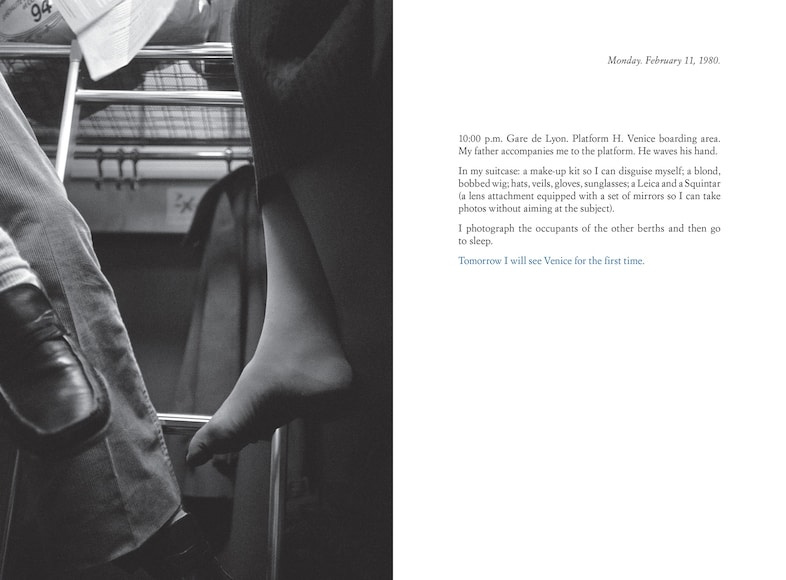
A stray moment that becomes evidence.
“Someone saw.”
So we don’t just perform for the people in front of us.
We perform for those who may see.
And not all rooms will like what they see.
Discipline and Visibility
Nobody wants to be the bad guy.

Better to never get it wrong than be rejected.
We naturally fear punishment and shame.
They hurt.
To protect ourselves, we have a built-in system of self-surveillance,
optimized for our social biases, for tribal coherence.
But what is our tribe now?
The various rooms of our world have never been perfectly compatible.
We can see it in the way we dress.
Work asks for one thing.
Family, friends, love another.
It’s normal.
Until recently, it was manageable.
We could keep it all apart.
In the modern world our rooms leak into one another.
Work sees the feed.
The feed sees the relationship.
Friends see the comments.
Partners see the DMs.
Family sees the headline.
So the old strategy, compartmentalisation, is no longer liberating.
It never really was, but at least it kept the friction at bay.
Now it’s a trap.
Walls around our growth for the sake of acceptance in a room that isn’t growing.
We can only grow inside one arena if the others tolerate the new version of us.
And when they don’t, growth demands sacrifice.
We trade one room for another.
Range for stability.
Coherence for access.
Foucault said “Visibility is a trap.”
The trap isn’t that someone is watching us.
It’s that we’ve started watching ourselves.

Running the supervision internally.
Managing ourselves in advance.
Shame as an operating system.
Pre-edited signals before they even leave our mouths.
Flattened edges.
Buried peculiarities.
Cookie-cutter opinions,
and clear sides on the debate.
Didn’t we agree that there are fifty shades of grey?
Is this maturity.
Emotional intelligence,
or just being easy to get along with.
But the rooms are asking for so much more.
It’s not just our palatability.
They score our values.
How we value time.
How we value rest.
How we value ambition.
How we value play.
How we value attention.
When our valuation conflicts with what the room wants,
Critique is delivered.
Shame is felt
Immature.
Unprofessional.
Selfish.
Cringe.
A problem to correct.
So we learn to switch value systems at speed.
And when the delta is high and the switching is fast,
our nervous system pays the bill.
We feel the incoherence, but there’s insufficient time to process it.
And before long,
we are coherent.
Stood in a place we thought we needed to.
Valuing things we didn’t.
Our inner world conquered
by the version of us
the room needs us to become.
The Market and Me
Our minds live in a constant state of fear.

The fear that we do not know what’s going on.
The fear of uncertainty ahead.
The human mind craves solving this problem.
So we model reality until it feels manageable.
We have always looked for ways to predict and stabilise our worlds,
and in turn, our identities.
Labels, patterns, routines.
Levers we can pull to remove the pains of discomfort,
the pains of not knowing.
And when we can’t stabilise it, we refresh.
We scroll.
We look for a signal that tells us what to be.
Over time, these private instincts have become industrialised.
The markets around us have never needed us to be us.
They need us to be legible.
Predictable.
Sortable.
In the modern age, Zuboff believes that surveillance capitalism “claims human experience as free raw material.”
Experience becomes extraction.
Extraction becomes prediction.
Prediction becomes sales.
And thus, stability has a price tag.
Low variance has become valuable.
And now that we know it’s valuable,
it is contested
at scale.
“Invisible images are actively watching us.”
Trevor Paglen
The idea of “me” isn’t a fixed object that we “are.”
It’s a model we live through.
Metzinger calls this idea of self “phenomenally transparent.”
Transparent in the sense that we don’t experience it as a model.
We experience it as reality.
We look through it and call it “me.”
A lens through which reality bends and distorts.
Some things look good.
Some things look bad.
But the ‘self’ defines the contrast.
And it wants to fit in.
“The self is another perception.”
Anil Seth
So the self conforms.
It adapts,
as it’s evolved to.
When the world rewards a stable identity,
our perception of “me” starts stabilising around what gets rewarded.
Markets and platforms industrialise that craving.
They monetise it.
They turn it into scores.
They feed it back to us as identity.
Our oldest need for certainty,
plugged into systems
that profit
from shaping what we want,
in return for belonging
So what?
Maybe we’re just products of our fears and desires.
We want to stay inside the room.
We fear expulsion.
We fear punishment and shame.
We fear uncertainty.
The modern world has found ways to monetise those fears and give them new surfaces for display.
Pressed between two sheets of thin glass,
so the microscope can see what we really are:
Thin.
Rooms leak into each other.
Scores travel.
Visibility follows.
And we absorb the feedback we’re given to fit in.
We keep trying to win a game where the victor isn’t on the field.
There is no score high enough to exit the arena.
So we split.
Fracture at the seams.
So how do we survive?
Some rooms we inherit.
Some rooms we choose.
When we choose, we’re signalling back: we like what you’re doing, and we want to be part of it.
We see the transaction when we’re entering.
We can name what we want from the room.
and what the room will want from us over time.
And stay honest about the fact that desire is embedded in every new doorway we walk through.
And later, when we love it less, or when the room asks for a version of us we never agreed to become, we face the adult decision.
Keep paying the price.
Or leave.
When we consider the reality of multiple rooms, it’s not an easy fix
The world will not become more coherent because we desire it to
Entropy is against us.
Switching between activities costs energy.
Solvable.
Switching between contexts and language.
Solvable.
Switching between values.
Catastrophic.
So what if the only way to achieve coherence is to go inside.
Stop letting someone else run the score.
Stop organising our lives around being successful out there.
Instead scoring ourselves around values that survive when the room changes.
Style may shift.
Tone can vary.
Format will change.
But our values must hold.
We begin to see our limits,
the boundaries of who our self can become,
and everything inside is acceptable.
Coherence isn’t a perfect personality across every arena.
It’s understanding what we’re not willing to become.
What is it that we refuse to lose in any room we enter?
And seeing how close to that edge we are willing to live.
Reflections I
My new install goes up this week.
Open to the public from 10 Jan.
It’s a giant mirrored metal box in East Village.
You draw on it.
There’s more to it, but you’ll see that when you get there.
It’s my way of exploring how we interact with the city.
It’s up for four weeks here
And on Saturday, I’m also putting out a game/performance.
Final Words
If you’re going to belong to anyone,
Belong to yourself.
Love you loads
- R x
p.s. I actually really like my alarm clock
As a wonderful detour, I highly suggest looking into the origins of face especially within Chinese culture. Linguistically Asian countries are much better armed with vocabulary for discussing its nuance - which is very interesting when we talk about the shape of the societies and the role of language in creating them.